Amanda Pevey
Elmore Autauga News
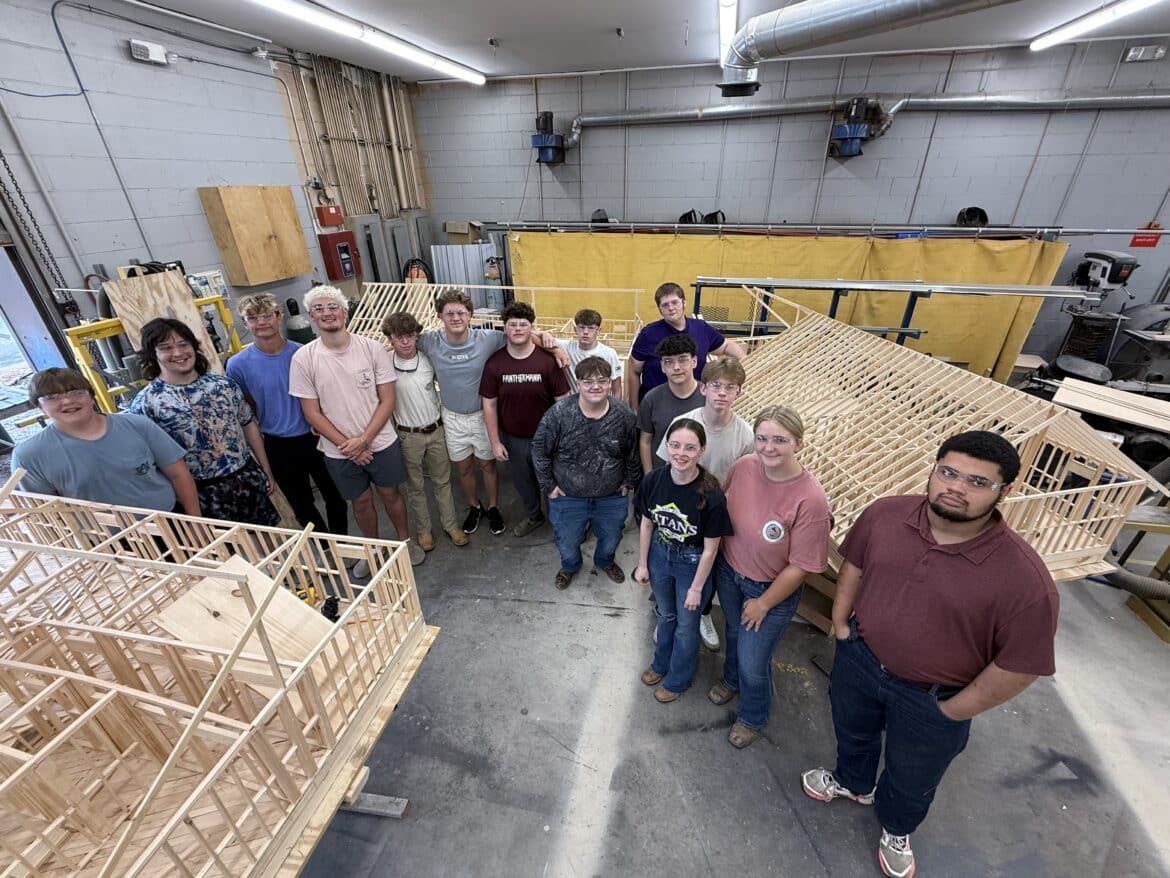
Students at Elmore County High School are building more than just model homes, they are laying the groundwork for future careers while honoring a long-standing community tradition.
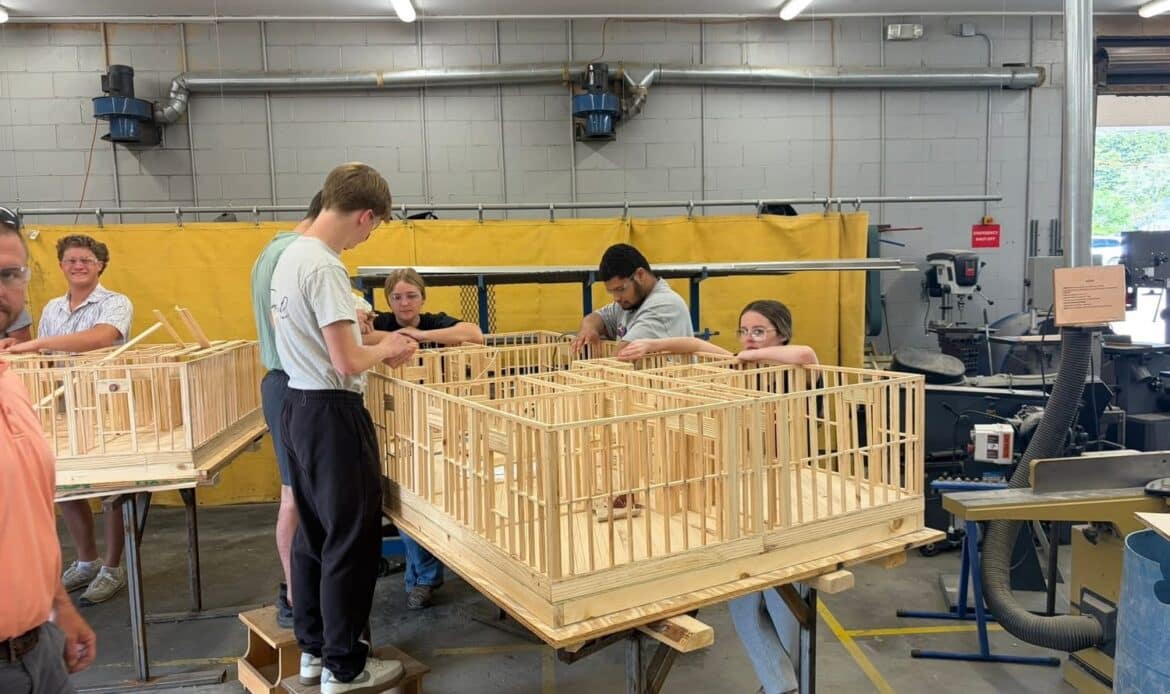
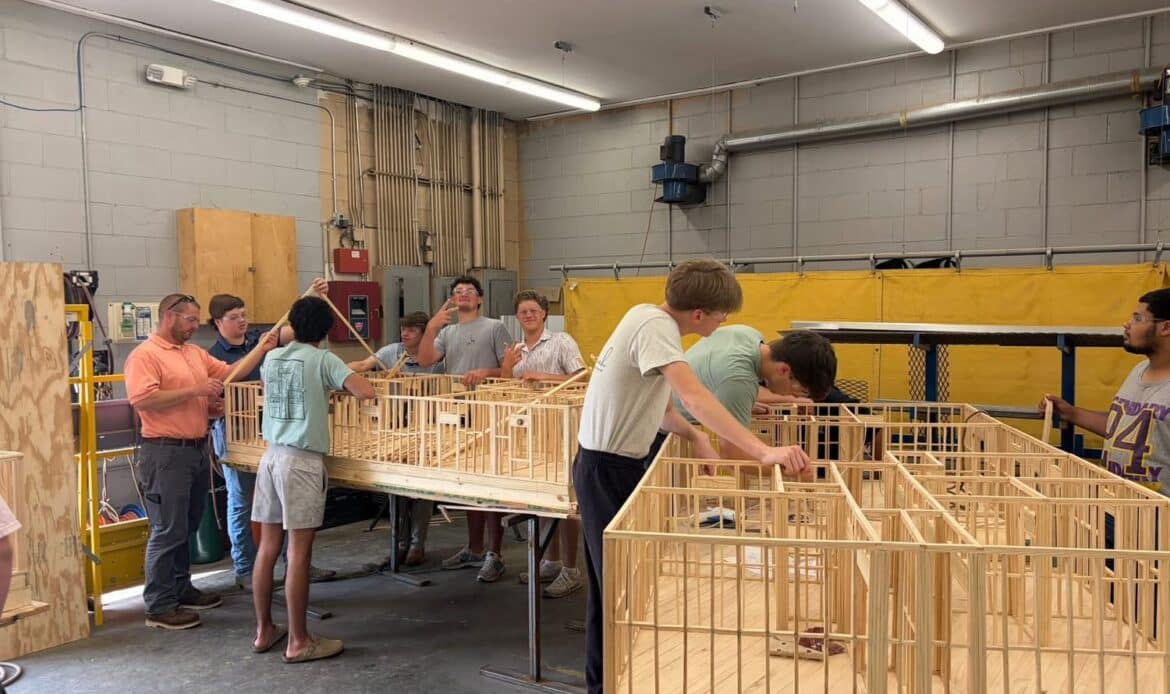
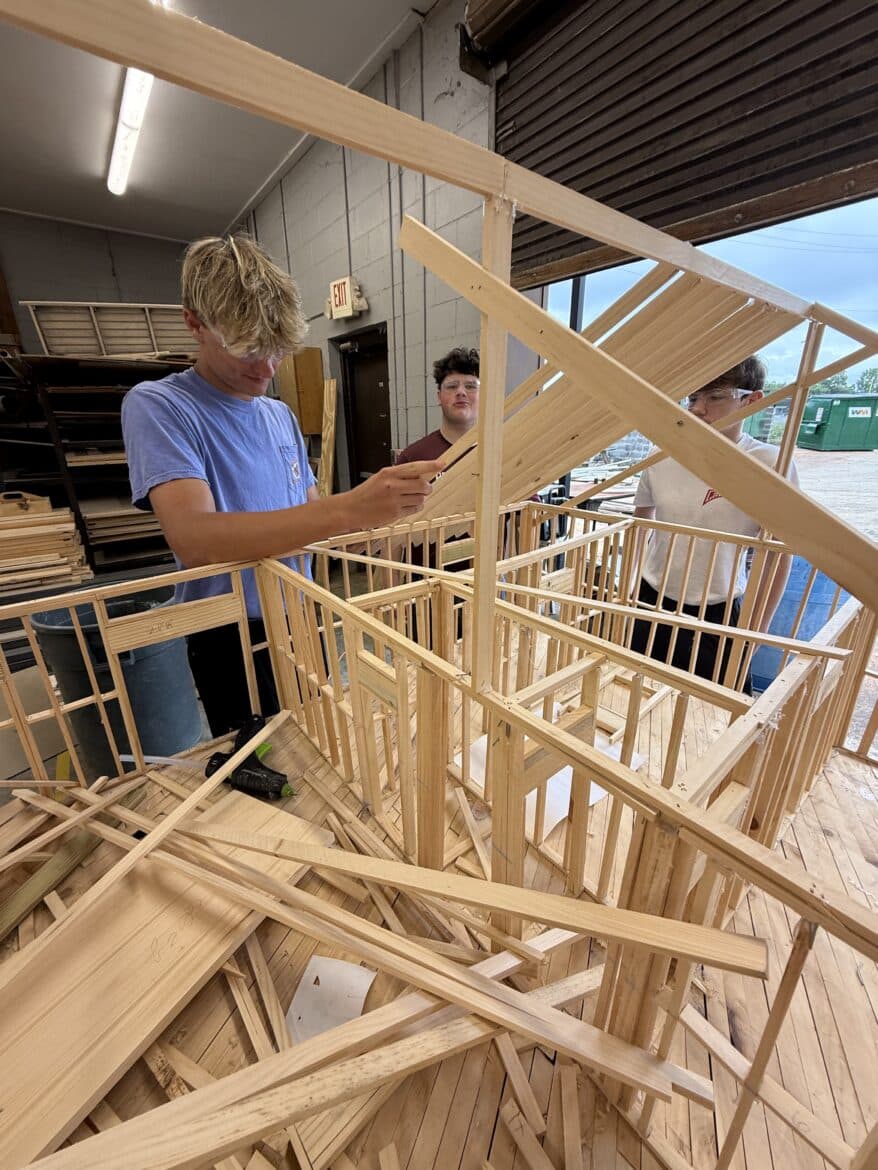
Inside the school’s agricultural science shop, small-scale houses, each crafted at one-eighth of real size, take shape piece by piece. The project, led by agricultural science teacher Scott Poague, blends math, design and hands-on construction into a yearlong experience that reflects the realities of the region’s workforce.
“The home construction project was begun by Turner Porter, who taught agriculture at Elmore County High School for over 30 years,” Poague said. “This town depends heavily on the construction industry for survival, especially with the lake at our back door. Porter saw the value in students understanding basic construction concepts that are often too costly, or we do not have the space in the shop to do on a real-life scale.”
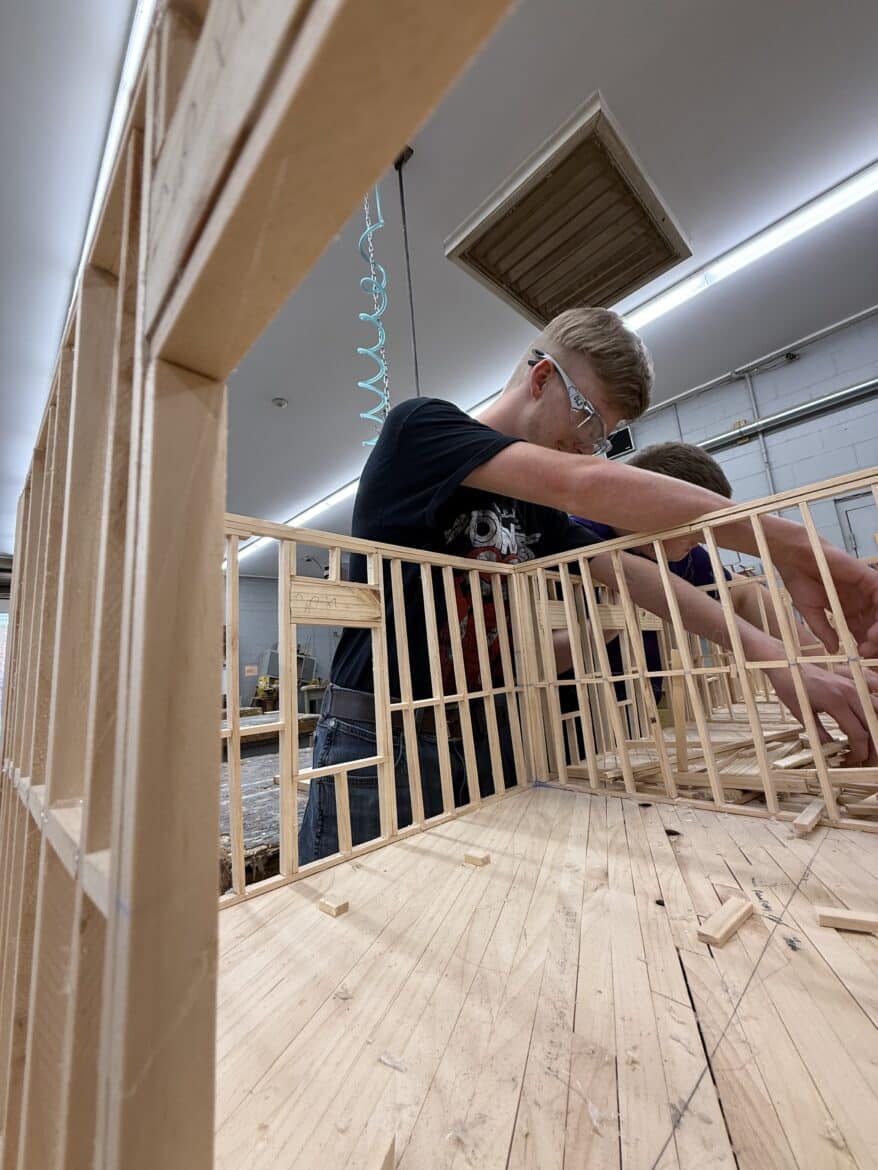
Working from full-size measurements, students must calculate and convert dimensions down to a 1/8th scale, building what would equate to an approximately 1,800-square-foot, three-bedroom, two-bathroom home. They even mill their own lumber to precise specifications before assembling the structures, often using hot glue in place of traditional fasteners.
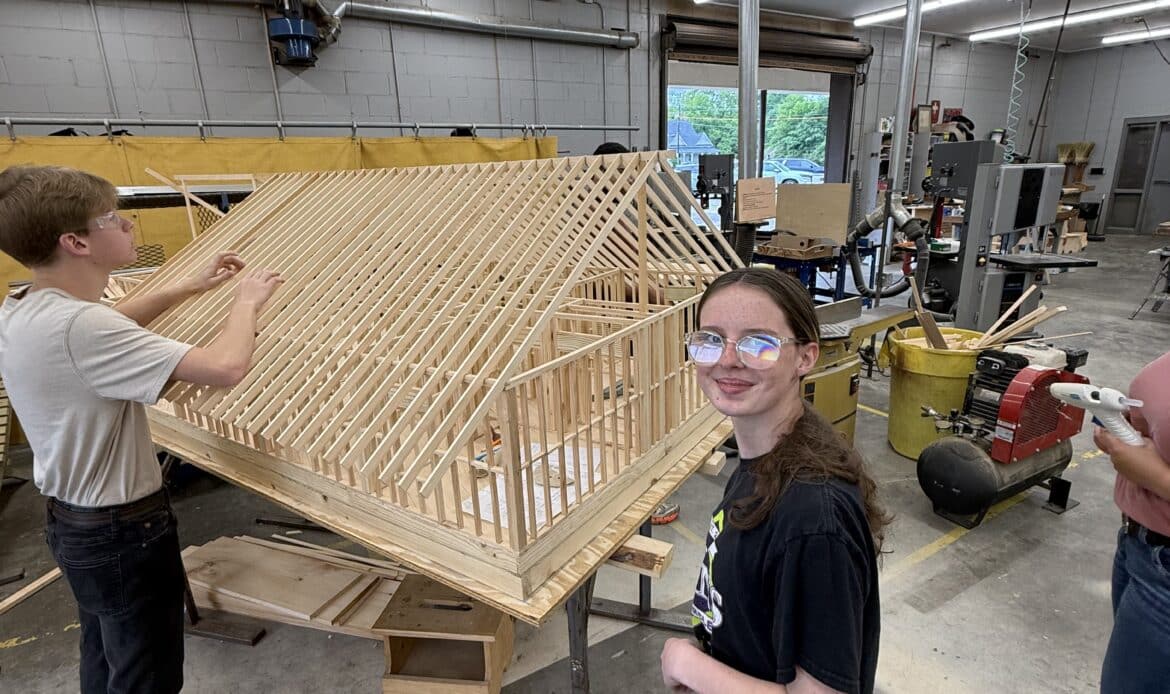
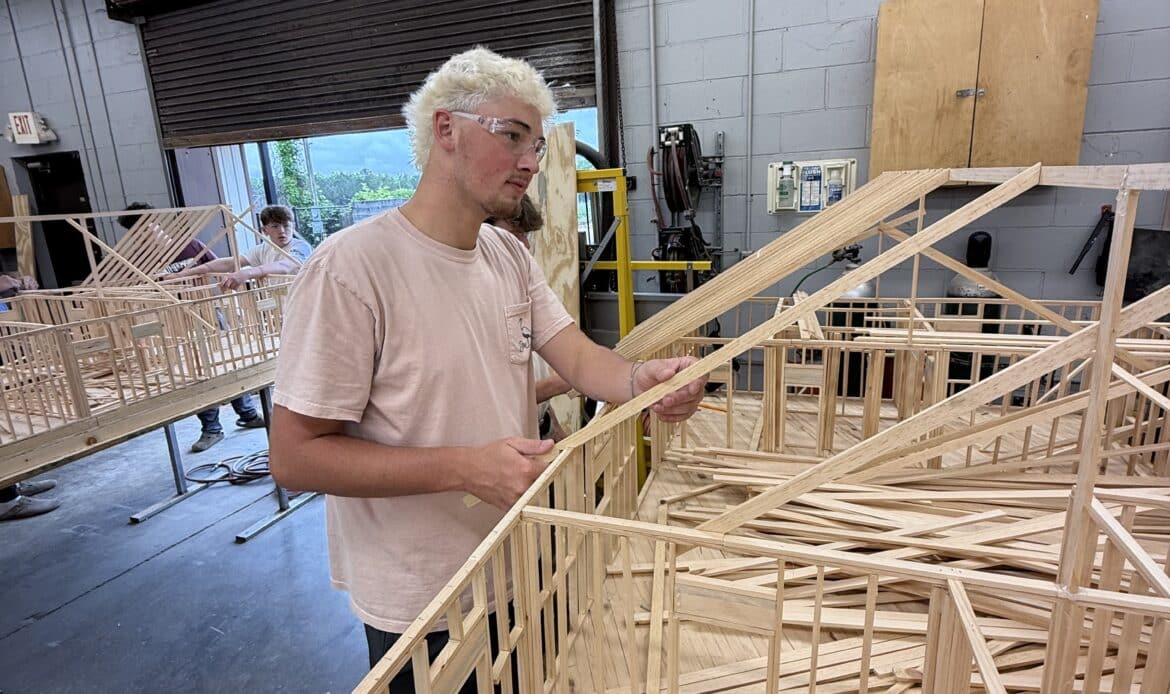
Along the way, students gain experience in floor framing, wall construction, roof framing and exterior siding installation. The class itself operates like a job site, divided into four “construction companies,” each with its own foreman and crew. The project spans most of the school year, requiring collaboration, problem-solving and attention to detail.
Poague said the scaled approach allows students to grasp the full scope of construction without the limitations of cost or space. “This project teaches students everything about framing a house from the foundation to the roof,” he said.
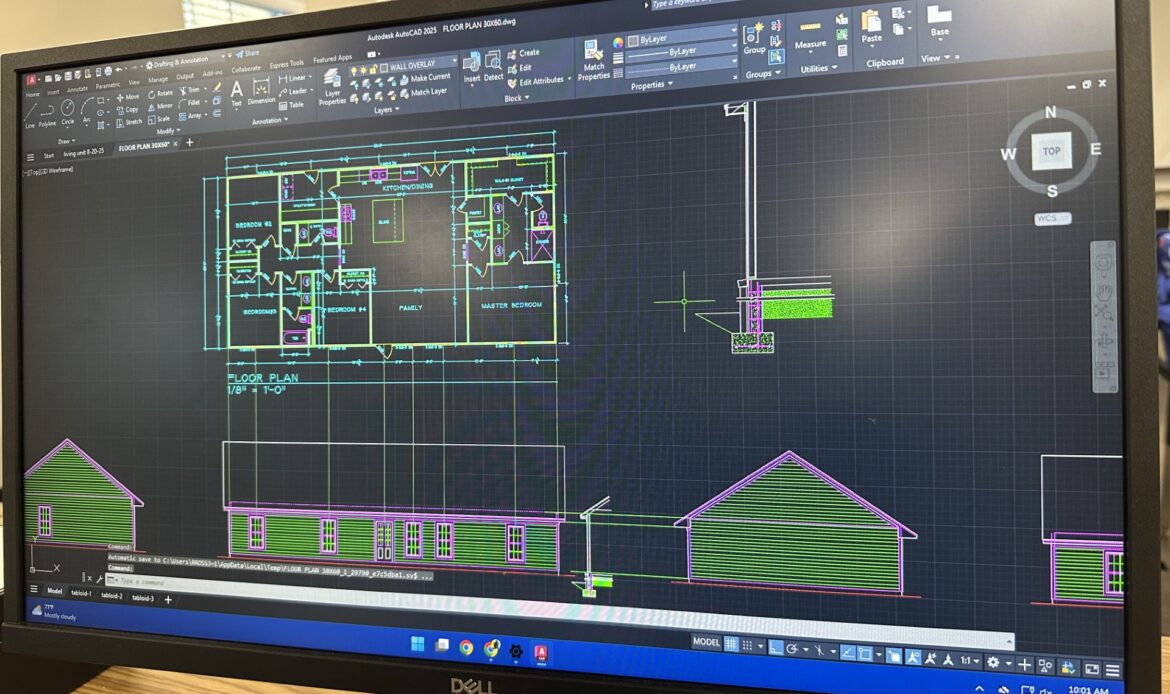
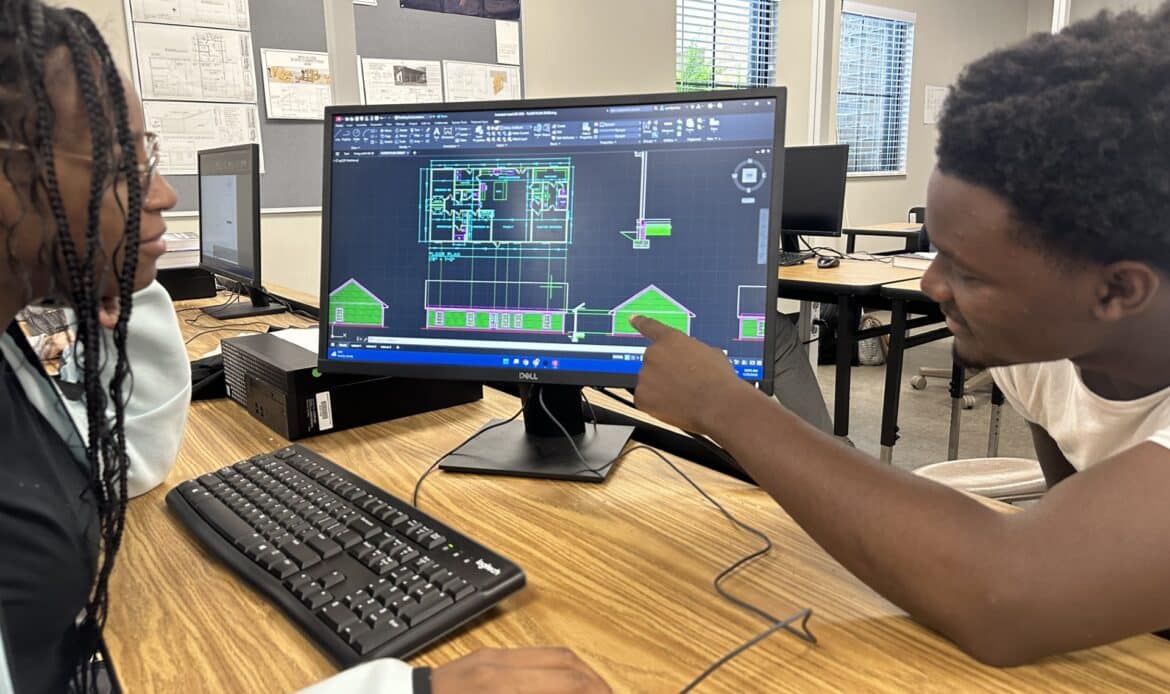
The effort is strengthened through a partnership with the Elmore County Career Technical Center, where drafting students help bring the homes to life on paper before they are built in the shop.
“These projects are referred to as ‘Live Work,’ as students develop design plans and construction drawings for actual clients,” said Mark Wellander, a drafting and design technology instructor at the center. “Project scopes have ranged from small residential additions to large-scale barndominiums, offering students a diverse range of design experiences.”
Third year students are enrolled in the Career Pathway Project in Architecture and Construction, a capstone course designed for those who have completed two or more credits in the Architecture and Construction Drafting and Design program. This course provides students with the opportunity to apply the knowledge and skills developed over the previous two years in a practical, real-world setting that highlights their learning.
In one recent collaboration, a student designed a set of drawings specifically for Poague’s Construction program. “The project required the development of a floor plan measuring exactly 30 feet by 60 feet, ensuring that when scaled, the structure would fit on a standard 4-by-8-foot sheet of plywood used as a base,” Wellander said. “The student’s final design featured a four-bedroom layout with two and a half bathrooms, demonstrating both technical precision and thoughtful planning.”
The partnership gives drafting students a tangible connection to their work while providing construction students with professionally developed plans, mirroring the relationship between architects and builders in the real world.
For Poague, the project’s impact goes beyond the classroom. It connects students to a vital local industry and gives them confidence in skills they can carry into the workforce or further education.
As the miniature homes near completion each year, they stand as detailed reminders that big opportunities can grow from small beginnings, especially when a community invests in teaching its students how to build from the ground up.