
By Andrew Edwards
Elmore/Autauga News Staff Writer
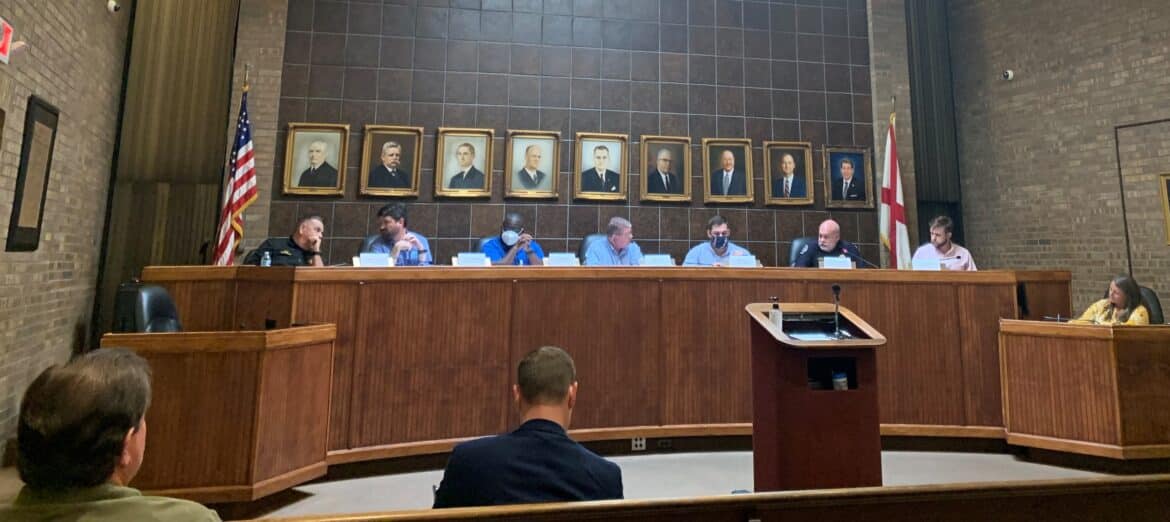
On Tuesday afternoon, a special committee met to continue discussions concerning Prattville’s Outdoor Alcohol Service Ordinance, also known as the “Beer Fence.”
Discussion members included Prattville Fire Chief Terry Brown, City Planner Scott Stephens, District 1 Councilor Albert Striplin, District 2 Councilor Marcus Jackson, District 5 Councilor Gornto, Police Chief Mark Thompson and Historic Preservation Commission Chairman Tim Sanford. They met at City Hall to further discuss the ordinance that would require businesses to which serve alcohol outside to erect fencing around their perimeter.
Subsequently, those establishments would have to purchase an outdoor alcohol service permit after inspection from the City Planning Department.
Nothing official came from the meeting, as its purpose was simply to brainstorm ideas to help further the ordinance.
“I want to establish a broad framework for an ordinance, then with the information that’s been received from this meeting, utilize the experts and see if we can fill in that framework,” Striplin said.
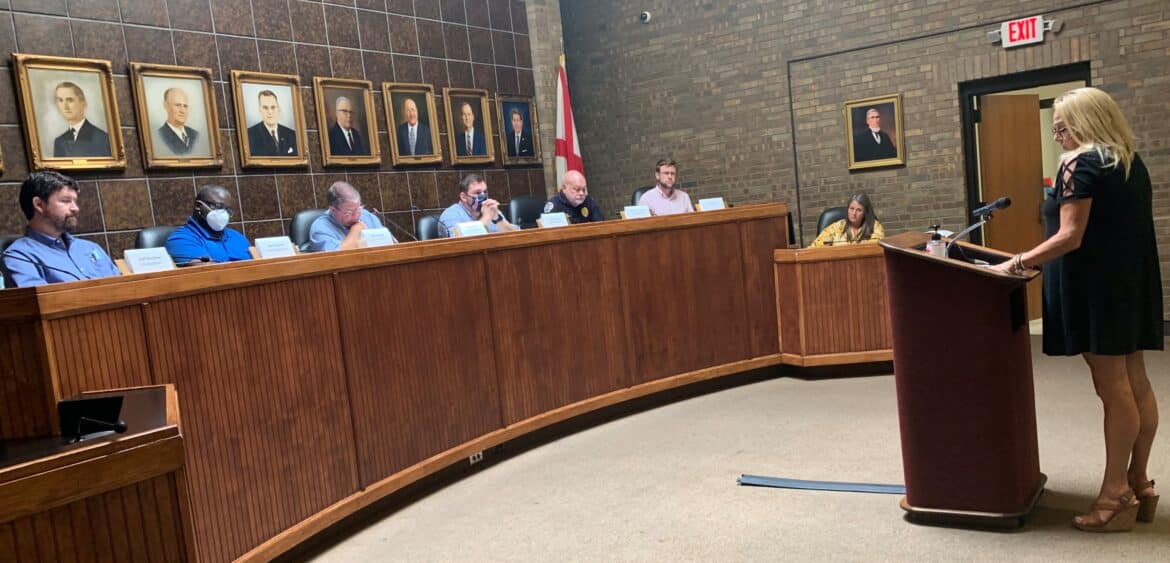
Lia Muir, owner of Kimberlia’s in Downtown Prattville, was the first ABC licensed business owner to give comments.
“I personally don’t want a fence, but rather a movable frame. I want to be able to pick it up and move it away. There are times like CityFest during the day where I wouldn’t want that there. People may want to use that space. I just think there’s times where a permanent fence wouldn’t be the best thing for the city,” Muir said.
Downtown establishments, unlike the rest of the city, would have to pass through a historic review committee before the fencing, movable or not, is erected.
Muir also asked what would happen to businesses in the downtown area like Fox’s Pizza and the Autauga Creek Craft House, who have already built outdoor barriers.
“If the ordinance is passed and we have to abide by certain rules, do places like Fox’s and the Craft House have to be asked to rip down the beautiful fence that they put up? They would then have to change theirs as well,” Muir said.
Later in the meeting, Muir explained that the ordinance could even address businesses on a case-by-case basis. She said that some establishments could have permanent barriers and some not. She explained even further that those with movable barriers could potentially move the fencing when they are not in hours of operation.
“I wouldn’t mind doing something like that all,” Muir said.
Derri Edwards, owner of Adrienne’s in Downtown Prattville, spoke next. He explained that the ordinance should exclude the repercussions for those who violate the ordinance – which have penalties such as $500 fines and up to six months of jail time.
“It seems a little excessive, for a barrier, to put someone in jail for up to six months. I think that portion should be taken out. I don’t want to go to jail because I don’t have a fence up,” Edwards said.
Members of the committee then shared their thoughts on the ordinance, including Gornto, who tended to agree with Muir’s comments. He explained that barriers that sink into the ground could be built, such as the ones seen at Maxwell Airforce Base.
“I don’t know why we’re stuck on this permanent thing – it doesn’t have to be permanent,” Gornto said.
Gornto went on ask Sanford what materials would be acceptable to build a barrier, whether that be a wooden privacy fence or something resembling the metal fencing closer to the creek walk.
“I think we need to delineate at least some types of materials that would be acceptable down here rather than what’s just already been approved,” Gornto said.
Sanford responded.
“The historic district is just a small portion of this ordinance, so I wouldn’t recommend putting in any specifics. However, HPC in the past has shown a willingness to work with both residential and commercial property owners. I think we’re on the right track, and I would question if permanent is required as well,” Sanford said.
Brown explained that the Fire Department would recommend that the barriers be stationary. He said the idea of them sinking into the ground could work, but he would advise against ones that could be picked up and moved.
“We don’t want situations where people pick those up and block the egress. We’d prefer it to be in a defined area. If you picked up the barrier and moved it, I think that area should be closed off,” Brown said.
Thompson explained that the barrier, movable or not, should have a gate that only allows people to leave from the inside. Those wanting to enter the gated area should only be able to once they have entered the main entrance.
“If you have a gate, where you can enter the gated area from the outside, then it’s going to be harder to restrict underage people from being there with alcohol,” Thompson said.
Thompson also recommended that the height of the barriers could uniformly be a height ranging from the “knee to waist area.”
Mayor Bill Gillespie, while not officially part of the committee, gave several comments about the current state of the ordinance.
“I don’t see where it’s [the ordinance] going to affect anybody, unless you come up with something very stringent. That’s the reason why it’s worded the way it is in the ordinance that’s been presented before the council already – that way it can fit so many different needs and support so many creative ideas,” Gillespie said.
The committee said that moving forward, they will look more in-depth into a minimum height requirement, building codes, ABC requirements and will take into account all comments from the meeting.
They are expected to reconvene on Sept. 28th.