
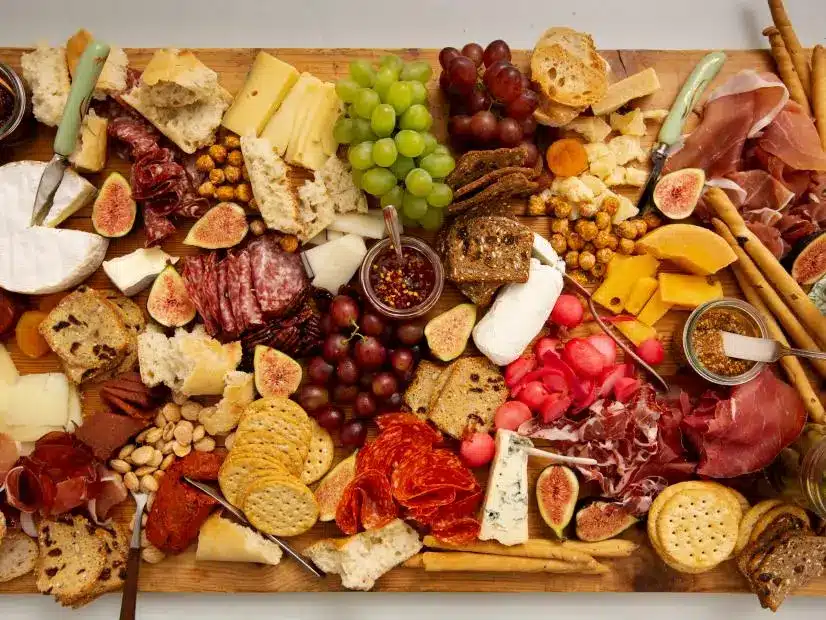
From The Food Network
Lifestyle Section
Ingredients
4 to 5 ounces thinly sliced dry-cured pork, such as prosciutto, country ham, speck, Serrano ham, capicola, Iberico ham or coppa
4 to 5 ounces thinly sliced salami, such as sweet or hot soppressata, finocchiona or Genoa salami
4 ounces thinly sliced dry-cured beef or other meats, such as bresaola or mortadella
4 ounces meat or poultry spreads, such as rillettes, pâté or ‘nduja
7 to 8 ounces soft cheese, such as Brie, Camembert, burrata, goat cheese, Gorgonzola dolce, fresh ricotta or triple-cream
7 to 8 ounces semi-soft cheese, such as drunken goat, fontina, muenster, Roquefort or Havarti
7 to 8 ounces firm cheese, such as Cheddar, Gouda, Gruyère, Stilton, Jarlsberg or manchego
7 to 8 ounces hard cheese, such as Parmigiano-Reggiano, Pecorino Romano, asiago or mimolette
1/2 cup local honey
Pinch crushed red pepper flakes
1/4 cup quince paste
1/2 cup fig jam
1 small bunch seedless green, red or other varietal grapes (about 1 pound), separated into smaller bundles
Pickled vegetables, such as radishes, okra, peppers or green beans, drained, for serving
1/2 cup cornichons, gherkins, kosher dill slices, bread and butter or your favorite pickles, drained
2 tablespoons whole-grain mustard
1 cup spiced or candied nuts
1/2 cup dried apricots or your favorite dried fruit
1 pint fresh figs or other ripe fruit, halved or sliced
1 baguette, half torn into pieces and half sliced and toasted for crostini
Two 5.3-ounce boxes seed and fruit crisps
2 packages crackers or breadsticks
Directions
- Place each type of meat on a different section of a large serving board. To make the slices easy to grab and visually interesting, fold and shape them in a variety of ways. You can make rosettes by folding pieces of meat in half and then rolling each up like a cigar. Pinch the cured ham into little mounds or arrange in swirls. Salamis can be rolled or folded into quarters and stretched across a section of the board in little “rivers.” Add the spreads to the board next, either mounded directly on the board or in small containers or on plates with a broad knife for spreading.
- Divide the cheeses among the sections, pairing them with the meats and spreads to contrast flavors and textures. Experiment with combinations. Try a creamy burrata or Brie as a companion to salty-sweet prosciutto; match a firm or hard cheese like asiago with a soft, mild mortadella; place a mild buttery fontina with a spicy salami to mellow it out. To encourage noshing, break the hard cheese into large shards, cut a wedge or two from a full wheel and slice some of the bigger blocks into easy-to-grab pieces.
- Pour the honey into a small glass jar or bowl, sprinkle in a pinch of crushed red pepper flakes and nestle it among the meats and cheeses with a little spoon for serving. Place the quince paste on a small plate or cutting board and the fig jam in a small bowl and place them among the meats. Arrange bundles of grapes near the saltier cheeses.
- Put the pickled vegetables, cornichons and mustard in separate small bowls and add them to the board. Fill in some the empty spaces with piles of nuts and apricots. Plug other blank spots with the figs or other fresh fruit. Fill in any remaining spaces with the baguette pieces, crostini, crisps and crackers, then put any remaining in a separate dish or basket.
- Serve the board at room temperature with an assortment of knives for cutting and spreading, small forks for spearing and spoons for drizzling and scooping. The board can sit at room temperature for up to 2 hours.