By Sarah Stephens
Elmore Autauga News
With Alabama legislation to ban the use of cell phones and other similar devices in all public school, things could get interesting. Governor Kay Ivey has endorsed legislation on the subject.
If you ask Stanhope Elmore High School Principal Ewell Fuller, he will tell you “Been there, done that. Expect resistance. But for us, it has been a fantastic move.”
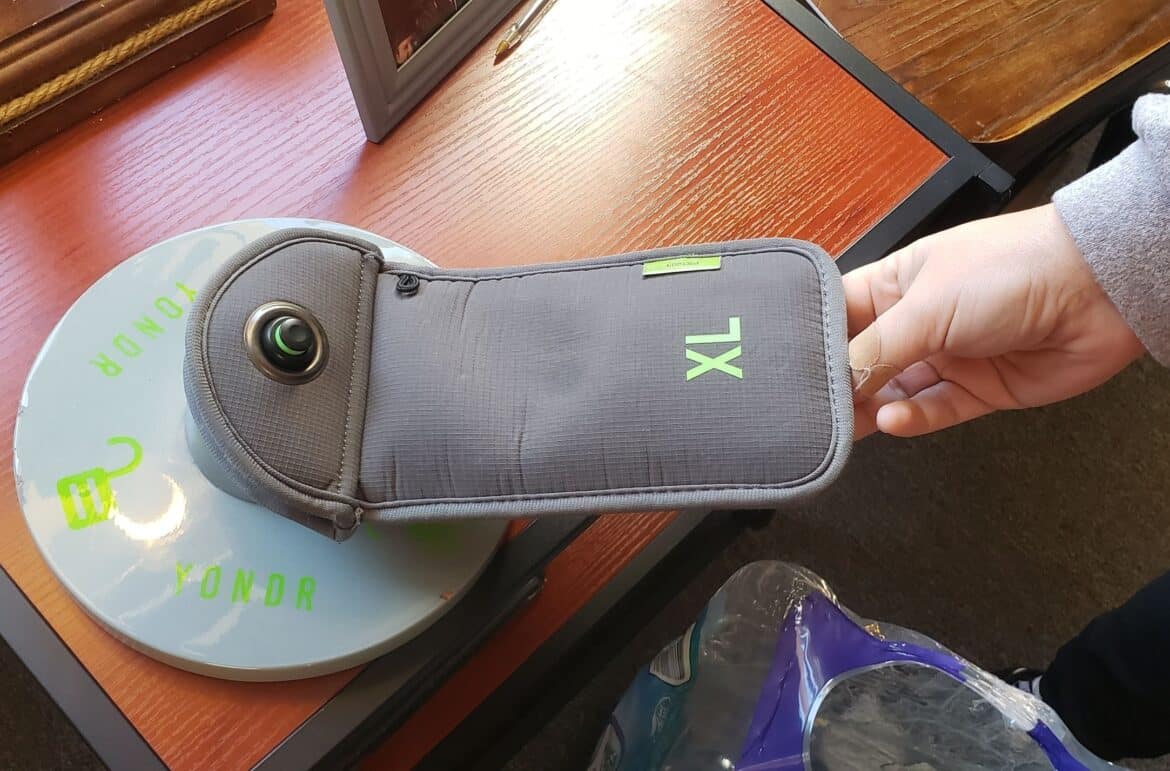
SEHS enacted the ban on cell phones three years ago. It is the only school in Elmore County to do so. They use the Yondr pouch to lock up phones during school hours. It cannot be unlocked until the end of the school day.
It is more than just Alabama looking at cell phone bans, according to Fuller.
“I have spoken to a lot of education officials across the country, and they want to know how it is gone for us,” Fuller said. “I cannot say enough about what a positive difference we have seen.”
The impact has covered all areas of the operation of the school, but particularly disciplinary actions and cheating on in-school assignments.
“I am just the guy that initially wanted to do it at this school. But I had the backing of Supt. Richard Dennis and the Board of Education which was incredible. It’s the teachers, assistant principals, custodians, the cafeteria ladies that make it work. They are the ones that make it happen. The teachers go through the hassle of interrupting class, writing it up. No one person can do it.”
Kathy Paschal teaches AP History and has been at SEHS since 1999. She spoke of the effects of before and after regarding cell phone bans.
“There were hardly any cell phones in 1999. I remember when it was decided the kids could have them in the hallway, or if there was an emergency. A lot of teachers said ‘Oh, it’s over.’”
“Cell phones were such a distraction. I cannot count the times it was an issue. The students would find creative ways to hide the phones. Then we were dealing with trying to locate the phone. For me, the biggest issue was using cell phones to cheat on tests or assignments during school hours. It was easy with the cell phones.”
In speaking of how parents and kids reacted to the cell phone ban, Paschal said there was tremendous blowback.

“I remember the first meeting Mr. Fuller had with the parents. They were ready to run him out of town.”
Fuller remembers the aftermath of when Elmore Autauga News was the first to break the news about the ban at SEHS.
“At a parent meeting later, there was a parent who claimed I was taking away their constitutional rights. She told me she was going to withdraw her kid from school if they could not have their cell phone. I was called Hitler; I was accused of being a dictator. It was awful. A lot of parents even reached out to my boys, and my boys begged me to stop. During Covid, my phone number was passed around a lot to the parents. They saved my number and with the cell phone ban announcement, I began to hate my phone.”
Fast forward to today, Fuller said the same parents who threatened to pull their students or file lawsuits also have a very different attitude. “One particular parent told me that at first she was my biggest critic. But at a recent event, she told she is now my biggest fan. She said her son’s grades went from Cs to As and Bs.”
Today there are rare issues. Even students tell him how grateful they are. “I had students telling me they were so glad their parents were no longer calling them throughout the school day.”
There was one issue in Fuller’s mind that kept him pressing forward, despite the overwhelming hatred he received.
“We had this one special education student. He used a Walker. One of his goals was to use the restroom and use the facilities like everyone else. He was using the restroom. One of the students took a video and air dropped the video. It went everywhere on social media.”
Fuller met with the special education student’s parents. He said, “The dad kept looking at me and saying, ‘Do something about it.’ I realized he was asking me to fix the problem not just for his son, but the problem overall. We had so many problems, but the most serious was distribution of child pornography. I had students arrested at school for it. I had to go to court over it. It was this never-ending nightmare of who did what, where, when. It was insanity.”
Fuller said there was a saying, “If the phone is going up, something is going down. We had way more altercations than we do now. They no longer have an audience and views and shares.”
Paschal talked about a field trip the students went on to the Legacy Museum. She went to Fuller to ask the students to have the ability to unpouch the phones, as there was so much history in the museum.
Both Fuller and Paschal said it ended badly.
“The museum had a no cell phone policy, but the kids were trying to take photos of the exhibits. It was TikTok videos in the bathroom,” she said.
Fuller said now when students go on field trips from SEHS, the facilities go out of their way to call the school and praise the students’ behavior, and there are no cell phones to be found.
Strict rules were put into place regarding field trips and the use of cell phones after the museum incident.
Heather Perdue is an 11th and 12th grade administrator and shared her perspective of the cell phone ban. She is in her second year at SEHS, so when she arrived the cell phone ban was already in place.
“It is not a big issue with the use of the cell phone, but sometimes they do not have them pouched. So, we do pouch checks pretty often now if a teacher hears a phone ringing. If the phone is missing from the pouch, we search for them. If we find a phone, they are written up. But that happens so rarely.”
She said she has noticed that a lot of the juniors and seniors now just leave their phones at home, or in their car.
Perdue said when she was looking for a job, she had multiple opportunities at different schools. It was the ban on cell phones that made her choose SEHS. “I liked that. I wanted to be a part of that,” she said. “I wanted to be at a school that did not have cell phone issues.” She said it would be hard for her to ever go to another school that did not have a cell phone ban.
Perdue said now when she meets students who have graduated and are attending college, they admit not having cell phones at their high school was far superior.
Fuller said that while there was enormous resistance in the beginning, it is rarely an issue these days.
“Now, every spring we have a parent night for upcoming eighth graders. At the end of it, I save the best for last and explain the Yondr pouches. I have zero questions these days,” he said. “Now, it just part of our culture and climate.”
Paschal said life is much better these days as a teacher. “There is more interaction. They are not involved with what they are doing on their cell phones. There is more socialization.”
As the interview came to an end. Fuller shared a letter from a former student, regarding how they feel now after graduation about cell phones being banned.
It reads in part, “The Yondr pouches help with social skills. So, anyone who complains, tell them to suck it up because life isn’t lived through a screen! Sometimes you have to do the hard things (lock your phone up for a week) to understand that some things aren’t just for gits and shiggles…they’re made to help us in the long run. And that’s just one example SE taught us.”
In closing, Fuller’s advice to school administrators and teachers should the cell phone ban legislation pass across Alabama is simple.
“It will be rough. Really rough. There will be crying and gnashing of teeth, potentially threats. And perhaps the worst will come from parents, who do not understand why they cannot talk to their child at any given moment. Stay the course….it does get better. And everyone will benefit in the long run.”
You can read the proposed Alabama legislation with links below. If passed, the ban would begin in the 2026-27 school year.
Senate Bill 92 proposed legislation – https://alison.legislature.state.al.us/files/pdf/SearchableInstruments/2025RS/SB92-int.pdf
House Bill 166 proposed legislation – https://alison.legislature.state.al.us/files/pdf/SearchableInstruments/2025RS/HB166-int.pdf