From US National Weather Service Birmingham Alabama
Birmingham, Alabama
While we don’t deal with everything Mother Nature has to offer, we get our fair share! Take a moment to familiarize yourself with some of the severe weather hazards we deal with here in Alabama. This information is especially useful for those that are new to the area.
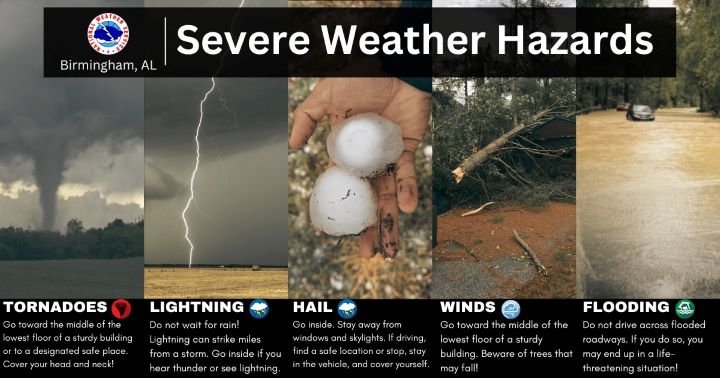
Tornadoes: While we can get tornadoes at any time of the year, most of our tornadoes occur from November into May. We often get tornadoes during the night, so it’s essential to have ways to receive weather alerts that will wake you up from your sleep. Ways of getting tornado warnings include NOAA Weather Radio, Wireless Emergency Alerts on your smartphone – make sure they are enabled under your settings, and reliable apps. from news media or your county emergency management agency. Places to shelter from a tornado include an interior location on the lowest floor of a sturdy building (hallway, stairwell, closet, bathroom, pantry, etc.), a home storm shelter, a basement, or a designated community storm shelter. Be sure to cover your head and neck with a helmet and heavy blanket. If you live in a mobile or manufactured home, it is recommended to have an alternate place to seek shelter due to their vulnerability.
Lightning: This hazard is underestimated by many because finishing a task or activity (lawn care/gardening, construction, sports, exercising) takes priority over taking shelter. Lightning can strike miles away from a storm. If struck, you could end up with permanent injuries or be killed. If you hear thunder or see a nearby flash of lightning, don’t risk it, head indoors and wait until 30 minutes after the last rumble of thunder or flash of lightning before heading back outside.
Hail: We issue warnings if we believe a storm could produce hail of 1″ in diameter (quarter size) or larger, which is when the risk of damage increases. While very large hail (baseball size, for example) isn’t too common here, it can happen, especially during the spring. If you have time, you can move your vehicle to shelter; otherwise, head indoors to avoid a hit to the head! If driving, pull over to a safe location or stop and cover yourself with something like a jacket if the hail is large enough to break windows.
Winds: Storms can produce strong straight-line winds, meaning blowing in one direction vs. spinning like with a tornado. These winds are still dangerous, especially with the amount of trees we have. Trees can be blown down across roadways, onto power lines, and onto homes. Don’t underestimate straight-line winds. Seek shelter indoors, preferably toward the middle of the building.
Flooding: This is a top weather-related killer because almost everyone underestimates the power of flowing water. A majority of flood deaths occur in vehicles! If you come across a water-covered road, play it safe and take a different route. It’s not worth losing your vehicle or putting lives at risk!
This post is for Severe Weather Awareness Week.