
BY SARAH STEPHENS
ELMORE/AUTAUGA NEWS
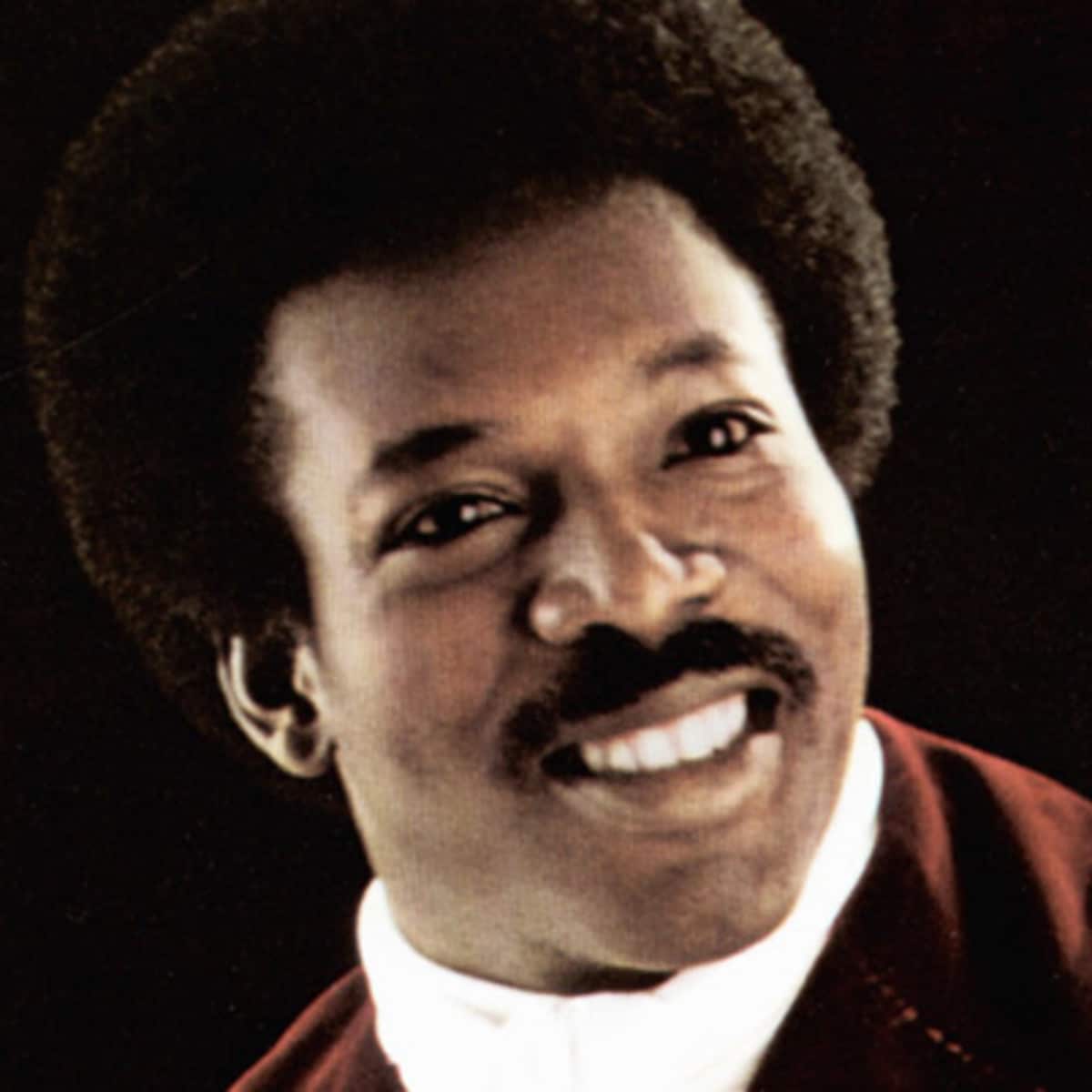
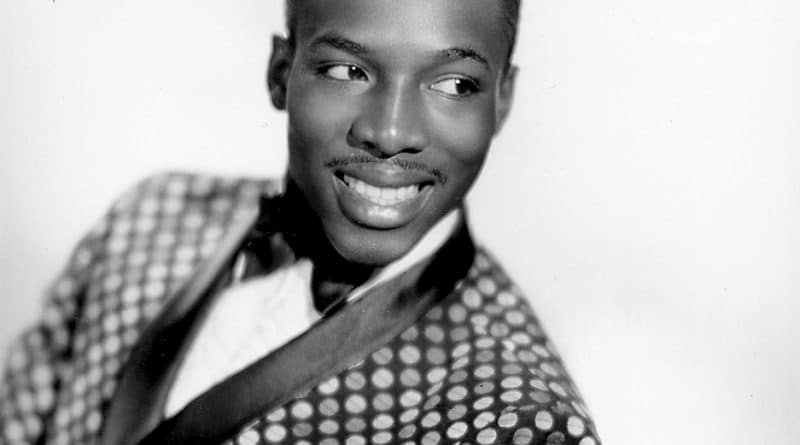
This coming Saturday, April 2, Prattville will honor the legendary Wilson Pickett with a Music and Arts Festival in his name. This is an annual event that will be held at Pratt Park downtown.
Pickett was a Prattville native and known for his talents as a songwriter, singer and musician. There is a great lineup of music and activities for all ages beginning at 10 a.m..
Festivities include an entertainment stage, food vendors, children’s activities, and an artist village, featuring local and regional artists representing a variety of media.
The fun begins at 10 a.m. at Pratt Park with the festival lasting until 5 p.m. The music will begin at 10 a.m. and roll into the evening until 9 p.m.
For more information, visit prattvilleal.gov.
This event is sponsored by the City of Prattville, the Alabmaa State Council on the Arts and Wilson Pickett, Jr. Legacy.
More information about Wilson Pickett, from Wikipedia:
Wilson Pickett (March 18, 1941 – January 19, 2006) was an American singer and songwriter.
A major figure in the development of American soul music, Pickett recorded over 50 songs which made the US R&B charts, many of which crossed over to the Billboard Hot 100. Among his best-known hits are “In the Midnight Hour” (which he co-wrote), “Land of 1,000 Dances,” “634-5789 (Soulsville, U.S.A.),” “Mustang Sally,” “Funky Broadway,” “Engine No. 9,” and “Don’t Knock My Love.”
Pickett was inducted into the Rock and Roll Hall of Fame in 1991, in recognition of his impact on songwriting and recording.
Pickett was born March 18, 1941 in Prattville, Alabama, and sang in Baptist church choirs. He was the fourth of 11 children. He moved from Prattville to live with his father in Detroit in 1955.
Pickett’s forceful, passionate style of singing was developed in the church and on the streets of Detroit, under the influence of recording stars such as Little Richard, whom he referred to as “the architect of rock and roll.”
In 1955, Pickett joined the Violinaires, a gospel group. The Violinaires played with another gospel group on concert tour in America. After singing for four years in the popular gospel-harmony group, Pickett, lured by the success of gospel singers who had moved to the lucrative secular music market, joined the Falcons in 1959.
By 1959, Pickett recorded the song “Let Me Be Your Boy” with the Primettes as background singers. The song is the B-side of his 1963 single “My Heart Belongs to You”.
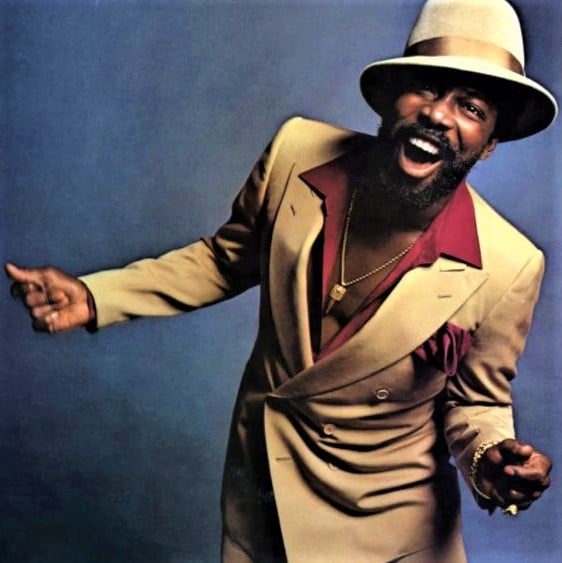
The Falcons were an early vocal group bringing gospel into a popular context, thus paving the way for soul music. The group featured notable members who became major solo artists; when Pickett joined the group, Eddie Floyd and Sir Mack Rice were members. Pickett’s biggest success with the Falcons was “I Found a Love,” co-written by Pickett and featuring his lead vocals. While only a minor hit for the Falcons, it paved the way for Pickett to embark on a solo career. Pickett later had a solo hit with a re-recorded two-part version of the song, included on his 1967 album The Sound of Wilson Pickett.
Soon after recording “I Found a Love,” Pickett cut his first solo recordings, including “I’m Gonna Cry,” in collaboration with Don Covay. Pickett also recorded a demo for a song he co-wrote, “If You Need Me”, a slow-burning soul ballad featuring a spoken sermon. Pickett sent the demo to Jerry Wexler, a producer at Atlantic Records. Wexler gave it to the label’s recording artist Solomon Burke, Atlantic’s biggest star at the time. Burke admired Pickett’s performance of the song, but his own recording of “If You Need Me” became one of his biggest hits (#2 R&B, No. 37 pop) and is considered a soul standard. Pickett was crushed when he discovered that Atlantic had given away his song. When Pickett—with a demo tape under his arm—returned to Wexler’s studio, Wexler asked whether he was angry about this loss, but denied it saying “It’s over”. Pickett’s version was released on Double L Records and was a moderate hit, peaking at No. 30 R&B and No. 64 pop.
Pickett’s first significant success as a solo artist came with “It’s Too Late,” an original composition (not to be confused with the Chuck Willis standard of the same name). Entering the charts on July 27, 1963, it peaked at No. 7 on the R&B chart (#49 pop); the same title was used for Pickett’s debut album, released in the same year. Compiling several of Pickett’s single releases for Double L, It’s Too Late showcased a raw soulful sound that foreshadowed the singer’s performances throughout the coming decade. The single’s success persuaded Wexler and Atlantic to buy Pickett’s recording contract from Double L in 1964.
Pickett’s Atlantic career began with the self-produced single, “I’m Gonna Cry”. Looking to boost Pickett’s chart chances, Atlantic paired him with record producer Bert Berns and established songwriters Barry Mann and Cynthia Weil. With this team, along with arranger, conductor Teacho Wiltshire[8] Pickett recorded “Come Home Baby,” a duet with singer Tami Lynn, but this single failed to chart.
Pickett’s breakthrough came at Stax Records‘ studio in Memphis, Tennessee, where he recorded his third Atlantic single, “In the Midnight Hour” (1965). This song was Pickett’s first big hit, peaking at #1 R&B, #21 pop (US), and #12 (UK). It sold over one million copies, and was awarded a gold disc. It garnered Pickett his first Grammy nomination for Best Rhythm & Blues Recording at the 8th Annual Grammy Awards.
The genesis of “In the Midnight Hour” was a recording session on May 12, 1965, at which Wexler worked out a powerful rhythm track with studio musicians Steve Cropper and Al Jackson of the Stax Records house band, including bassist Donald “Duck” Dunn. (Stax keyboard player Booker T. Jones, who usually played with Dunn, Cropper and Jackson as Booker T. & the M.G.’s, did not play on the studio sessions with Pickett.) Wexler said to Cropper and Jackson, “Why don’t you pick up on this thing here?” He performed a dance step. Cropper explained in an interview that Wexler told them that “this was the way the kids were dancing; they were putting the accent on two. Basically, we’d been one-beat-accenters with an afterbeat; it was like ‘boom dah,’ but here was a thing that went ‘um-chaw,’ just the reverse as far as the accent goes.”
Other big hits in Pickett’s career included his remakes of Mack Rice‘s “Mustang Sally,”(#6 R&B, No. 23 pop), and Dyke & the Blazers‘ “Funky Broadway,” (R&B No. 1, #8 pop). Both tracks were million sellers. The band heard on most of Pickett’s Fame recordings included keyboardist Spooner Oldham, guitarist Jimmy Johnson, drummer Roger Hawkins, and bassist Tommy Cogbill.
Pickett died on January 19, 2006, two months short of his 65th birthday. He had been suffering from health problems for the last year of his life and had spent considerable time in the hospital. He died at a hospital in Reston, Virginia after suffering a heart attack. At the time of his death, Pickett was living in Ashburn, Virginia. He was laid to rest in a mausoleum at Evergreen Cemetery in Louisville, Kentucky. Pickett spent many years in Louisville. The eulogy was delivered by Pastor Steve Owens of Decatur, Georgia. Little Richard, a long-time friend of Pickett’s, spoke about him and preached a message at the funeral.
Pickett was remembered on March 20, 2006, at New York’s B.B. King Blues Club with performances by the Commitments, Ben E. King, his long-term backing band the Midnight Movers, soul singer Bruce “Big Daddy” Wayne, and Southside Johnny in front of an audience that included members of his family, including two brothers.